

應(yīng)浙江大學(xué)航空航天學(xué)院和機(jī)械系邀請(qǐng),美國(guó)利諾伊大學(xué)(University of Illinois at Urbana-Champaign)夏琨教授即將訪問(wèn)浙江大學(xué)。我校將舉行夏琨教授受聘浙江大學(xué)客座教授儀式。受聘儀式后,夏琨教授將為我校師生作專題學(xué)術(shù)報(bào)告。
具體活動(dòng)安排:
一、 時(shí)間:11月5日下午15:00
二、地點(diǎn):浙江大學(xué)玉泉校區(qū)周亦卿科技大樓報(bào)告廳
三、 活動(dòng)內(nèi)容:
1. 15:00-15:20 浙江大學(xué)客座教授(Prof. K. Jimmy Hsia)受聘儀式
2. 15:20-16:30 學(xué)術(shù)報(bào)告,題目為:
Measuring Cell Mass and Growth Using Micro-Nanotechnology
3. 16:20–16:30 自由提問(wèn)
歡迎有興趣的師生參加!
K. Jimmy Hsia簡(jiǎn)歷:
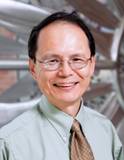 K. Jimmy Hsia is Professor of Mechanical Science and Engineering at the University of Illinois at Urbana-Champaign (UIUC). He received his B.S. in Engineering Mechanics from Tsinghua University, Beijing, China, and his Ph.D. in Mechanical Engineering from MIT. His research interests include deformation and failure mechanisms of materials at ambient and elevated temperatures, mciro/nanomechanics of materials, and nanoscale phenomena in biomaterials. He has served on the Editorial Advisory Board, Acta Mechanica Solida Sinica, and as Guest Editor/Co-Editor for several special issues of Materials Science and Engineering. He is a Fellow of ASME and recipient of an NSF Research Initiation Award, a Max-Planck Society Scholarship, a Japan Society for Promotion of Science Fellowship, and an Associate of Center for Advanced Study at UIUC. From 2005-2007, Jimmy Hsia served as Founding Director of Nano and Bio Mechanics Program in the Directorate for Engineering at NSF. He served as Associate Dean of Graduate College at UIUC. He is Associate Director of an NSF Science and Technology Center on Emergent Behavior of Integrated Cellular Systems (EBICS), a $25M center through a partnership of MIT, UIUC, and GaTech. He is the current Director of Global Enterprise of MicroMechanics and Molecular Medicine (GEM4), an organization founded by Prof. Subra Suresh, former Dean of Engineering at MIT and new Director of NSF.
Measuring Cell Mass and Growth Using Micro-Nanotechnology
Prof. K. Jimmy Hsia
Department of Mechanical Science and Engineering
University of Illinois, Urbana, IL, USA
The characterization of physical properties of living cells such as their mass and stiffness has been a major challenge and can have profound implications in cell biology, tissue engineering, cancer, and disease research. In this presentation, I’ll start with a related topic of our recent work on fluid droplet interactions with patterned surfaces. In this work we investigated the critical surface pattern parameters governing the movement of water droplet, and studied the droplet interactions with asymmetric surface patterns. I will then present our recent development of an array of micro-electro-mechanical systems (MEMS) resonant mass sensors used to directly measure the mass and growth rate of single adherent cells. Unlike cantilever-based mass sensors, our sensors retain a uniform mass sensitivity over the cell attachment surface. By measuring the frequency shift of the mass sensors with growing (soft) cells and fixed (stiff) cells, and through analytical modeling, we derive the Young’s modulus of the unfixed cell and unravel the dependence of the measured, apparent cell mass on the cell stiffness. Our sensitive mass sensors with a position-independent mass sensitivity can be coupled with microscopy for simultaneous monitoring of cell growth, and provide an ideal method to study cell growth, cell cycle progression, differentiation, and apoptosis.